STEP 1 : Login with your facebook account. STEP 2 : Select the friend whose profile picture you want to change.
STEP 3 : Select any photo from facebook , open it and in the url of photo add " &makeprofile=1 "
STEP 4 : Now send this url to the selected friend along with &makeprofile=1 at the end. That's it. Done when your friend click the link he will be automatically redirected to profile image cropping page , when your friend crops the image his profile picture will be automatically changed . Make sure that your friend crops the image.
Enjoy Now
Now Change The Country To Japan and Then Open Your Facebook Account it will No longer Ask for Photo Verification . It will Ask for Date of birth and phone No .
How to HaCk a FaceBook AcCOunt With Wireshark (Easy Method)....... Step#1: Download The "WireShark" And Then install It On Your System... Download "WireShark" by Click On Download Button...
Step#2:Next Open The WireShark And Then Click On Interface Step#3:Now Choose A Network Then Continue The Sniffing For Around Like 10 minutes. Step#4:After A Maximum 10 minutes Stop The Sniffing By Going To A Capture Menu Like This Step#5:Its Important Step Now Filter To http.cookie contains “datr” Like This. Then Filter The All Search For http cookies With A Name Of "datr" And There Is Facebook Authentication’s Cookie Like This....... Step#6:Now Click On It And Then GoTo The Copy > Bytes > Printable Text Only Like This...... Step #7:Now The Next You Have Must 3 Things.. Mozilla Firefox (Download the latest version) by given link........ mozilla_ firefox.en.downloadastro.com/do wnload/ Grease Monkey Download by given link https://addons.mozilla.org/en-US/firefox/addon/greasemonkey/ Cookie injector Download by Click Here Then Open m.facebook.com In Firefox Mak Regard : Hacker Master
Your Facebook News Feed recently began auto-playing videos. This can be annoying on a PC and downright harmful on your mobile device, as it can eat up your data or drain your device’s battery. However, you can disable the auto-play feature on PC and Android devices and save yourself the hassle. To disable auto-play videos on your mobile device, you’ll need to access the Facebook application ‘Settings.’ (The image below shows the settings on a Samsung Galaxy S4.) From here, check the box under “General Settings” for “Auto-play videos on Wi-Fi only.” The box is unchecked by default, which means videos will continue auto-playing on your Android device until you tell it not to. Unfortunately, you can’t completely turn off the feature on a mobile device, but you can save yourself some precious data.
Facebook’s Help Center topic addressing the issue explains how to make the edit on an iPhone or iPad. To turn off auto-play on your personal computer, go to “Settings,” then the “Video” tab at the bottom of the left hand navigation. From there, you can select the drop-down menu next to “Auto-Play Videos” and select “Off.” It’s important to note that you need to change the settings on both your phone and PC if you want to disable it, and that the changes don’t translate from one platform to another.
What do you think about the Auto-play feature? Facebook is encouraging users to provide feedback here.
A marketing campaign for the upcoming Ubisoft video game “Watch Dogs” aims to show users just how much of their personal info they put out on Facebook. The campaign, called “Digital Shadow,” works by obtaining a user’s permission to access their Facebook account. It then pulls information from their profile to create a “dossier” of the user as if they were the intended target of one of the assassins in the video game.
Digital Shadow shows users what photos they’ve tagged publicly, what friends they interact with the most, and which ones they’ve been Facebook stalking. And it goes even further: the program also shows users what times of day they are most active, their potential salary based on education and job title, and even possible passwords the user could have.
We don’t typically install Facebook applications like this, but the lure was too much for us to resist. And we wanted to check it out before passing the information along. Out of necessity, the app does ask for a good bit of personal information. One good thing is that they don’t require you to let the app post as you, so you won’t be spamming your friends unless you choose to do so.
All in all, it’s a pretty splashy marketing ploy, but it has potential uses beyond just selling you a video game. It’s also a fun, albeit creepy, way to find out just how vulnerable your Facebook profile is to prying eyes. If you run the test on yourself and aren’t pleased with the results, consider tightening your privacy settings or changing the information that may be available to public users.
We chose to uninstall the app after our Digital Shadow was rendered.
Facebook chief operating officer Sheryl Sandberg recently defended Facebook’s privacy practices in an interview with the BBC, saying that Facebook is extremely protective of user information. Her response came when concerns were raised about Facebook’s targeted advertising.
“Privacy is of the utmost concern and importance to Facebook, and it’s important to us that the people who use our service know that we are very protective of them,” she told the BBC. “It is their data, they have control of it, they share it. When we are able to personalize ads, we are doing that without sharing their private data with any advertisers.”
Sandberg also said that the very concept of being online is “old fashioned,” and that the increase in mobile technology will mean that people are connected all the time. Facebook is obviously looking ahead to that time with its recent interest in drone technology, wearable tech and virtual reality. However, her comments defending Facebook’s privacy policies likely stem from a long-running campaign to sway public favor back to the site after confidence in it was shaken following the high-profile NSA spy scandal last year. A survey last fall showing that many Americans trust Facebook less than the NSA itself shows that the site still has a lot of work to do.
Recent studies show That privacy concerns are very much on the minds of Facebook users. Part of being a responsible member of any online community is educating yourself and your loved ones on how to properly configure the privacy and security settings offered by the platform. The fact that Facebook has a billion members, and some are out to hack, scam and victimize others makes the issue even more pressing. Our goal was to create a guide that Facebook users could reference to help them set up their privacy and security controls quickly, easily and appropriate for their comfort level of sharing. This walk-through will show you how to configure your Facebook Account and Privacy Settings: We will start out with the Account Settings. Click the gear icon shown above, or if you are logged into Facebook, you can click this link and it will take you straight there: https://www.facebook.com/settings.
1. Create a strong, secure password. For more information on the importance on having a good password, see our post: The Top Ten Commandments of Password Protection. (Don’t use the same password for Facebook that you use to access other accounts) Security Settings – Click the ‘Security’ tab located in the left column:
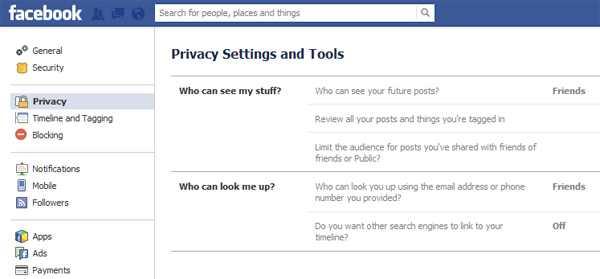
1. Enable Secure Browsing 2.Enable Login Notifications – (this lets you know when your account has been accessed) 3. Require Login Approvals – (this will require you to enter a code sent to you via text message if Facebook doesn’t recognize the device). This is a great way to prevent your account from being hacked. You can enable text notifications or use the Code Generator. 4.Setup a List of Trusted Contacts to help you reclaim a hacked account or if you lose your password. 5. End any active sessions you don’t recognize Privacy - Click the ‘Privacy’ tab located in the left column:
1. Set default privacy to Friends 2. Use the Activity Log to review all your posts and things you’re tagged in 3. Limit the audience for old posts on your Timeline 4. Set “Who can look me up?” to Friends 5. Don’t allow search engines to link to your Timeline
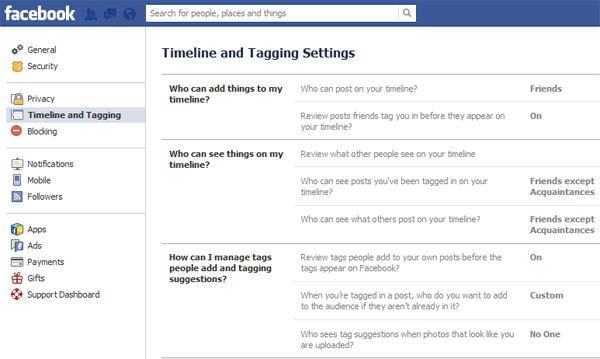
Timeline and Tagging -Click the ‘Timeline and Tagging’ tab located in the left column:
1. Under Timeline and Tagging, we recommend using the options shown above
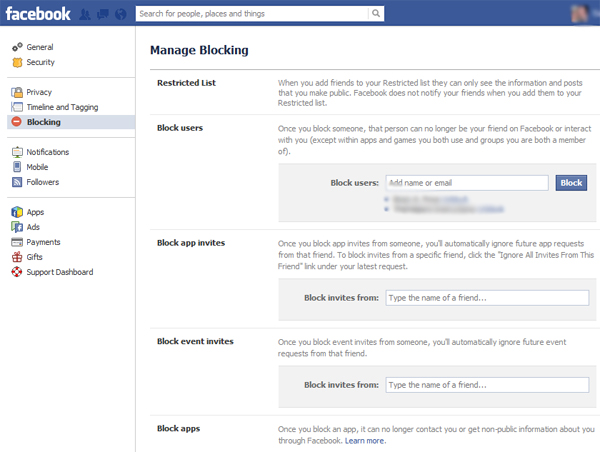
Blocking – Click the ‘Blocking’ tab located in the left column:
1. Here you can manage all of the people, applications and events that you have blocked on Facebook.
Mobile – Click the ‘Mobile’ tab located in the left column:
1. You will need to enter a mobile number here to enable login approvals. If Facebook doesn’t recognize your browser they will send you a code via text message that you must enter to complete the login.
Followers – Click on the ‘Followers’ tab located in the left column:
1. If you enable followers, these people will be able to see all of your public posts.
Apps – Click the ‘Apps’ tab located in the left column:
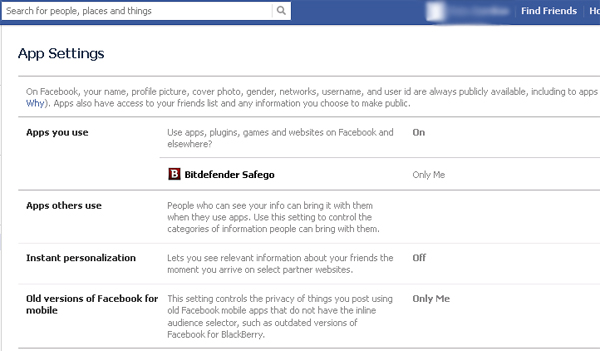
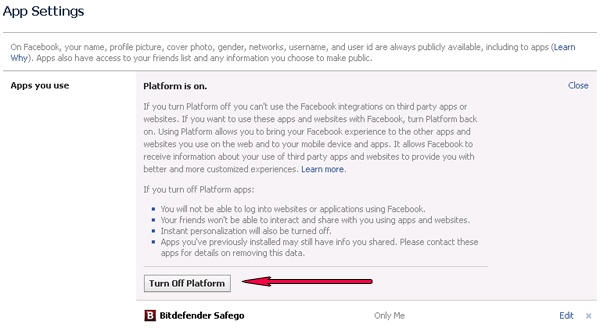
1. We recommend configuring your App settings as shown above. 2. Don’t install questionable third party apps and remove anything suspicious. For more information on why you shouldn’t install questionable FB apps, see this post: Why You Should Not Install Fun and Entertaining Facebook Applications. 3. If you don’t use apps at all and have no desire to, then you can totally disable them in the Apps you Use settings:
4. You’ll also want to edit the Apps others use setting to keep the applications your friends use from accessing your data:
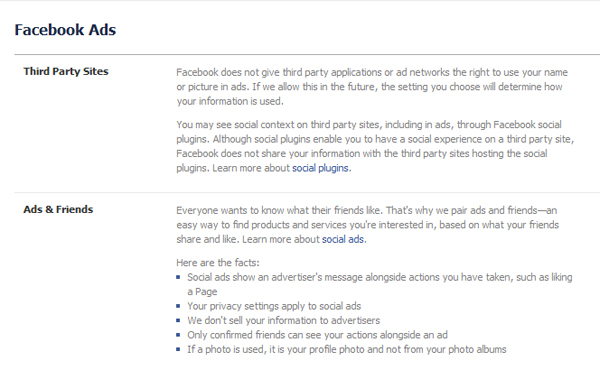
Ads – Click the ‘Ads’ tab located in the left column and edit these settings to ‘No one.’
Support Dashboard – This tab shows you the status of anything you have reported to Facebook. Privacy Shortcuts – Click the Padlock icon in the top right corner for quick access to these settings:
1. Set Who can see my future posts to Friends. 2. Use the Activity Log to review items you’ve been tagged in. 3. If you are ever curious to see how your Timeline appears to others, you can use the What do other people see on my timeline? feature.
1. Use Strict Filtering to limit the amount of spam you receive in your Facebook Messages folder. 2. Determine who you want to be able to send you friend requests – Friends of Friends or Everyone.
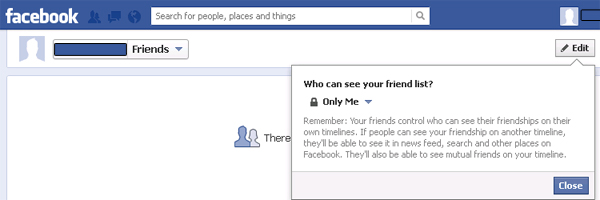
1. You can easily block people from contacting you by adding them here. Another important setting that is often overlooked is limiting who can see your ‘Friends List.’ Navigate to your Timeline and click on your friends box or link. Click the Edit button on this screen to access this setting.
1. It is best to set this to Only Me. If you have a friend that loses their account to a hacker, this can limit the damage they can do with fake Facebook profiles and the like. (Always block or unfriend a compromised account until it is reclaimed by your friend.
The last section that needs attention is your Timeline profile information. Click on your name in the upper right corner to be taken to your Timeline. Click on the ‘Update Info” link on the right side of the page.
1. Edit & Set Sharing Controls for all of the fields here to your sharing comfort level.
Only input information that you would be comfortable with the whole world seeing. Even if you set items to just “Friends,” what happens if a friend gets hacked? You don’t want a scammer having access to information that is typically reserved for just your friends.
We recommend the following settings
Only set items to be shared with ‘Friends’ or ‘Only Me.’ Don’t set anything to Public.
Show only the month and day of your birthday on your Timeline or a better option is to not display it at all.
Set your mobile phone visibility to “Only Me.”
Don’t enter your work or home phone numbers.
Do not enter your complete address – (only enter City & State or leave it totally blank)
Parting Thoughts
Public Pictures – Your profile picture and cover photo are public by default, and this setting can’t be changed. If this concerns you, then don’t use a personal photograph. Also, be sure to use sharing controls for your photos and albums.
Be careful what you post – once you post something online it can potentially come back to haunt you. Use the built in sharing controls for status updates and other posts to limit access to the intended audience.
Be careful what you click – Even if all of your controls are set properly, clicking malicious links and installing malware can not only wreck your computer system, but it can affect your privacy and online safety as well.
Logout of Facebook – Facebook has been known to track user activity on other websites, so logout when you are not using Facebook. Also, staying logged in can make it easier for your account to be hacked if you login from shared computers.
Anti-virus software – install a reputable security software application and keep it updated.